
New York Academy of Science
Neural Harmony
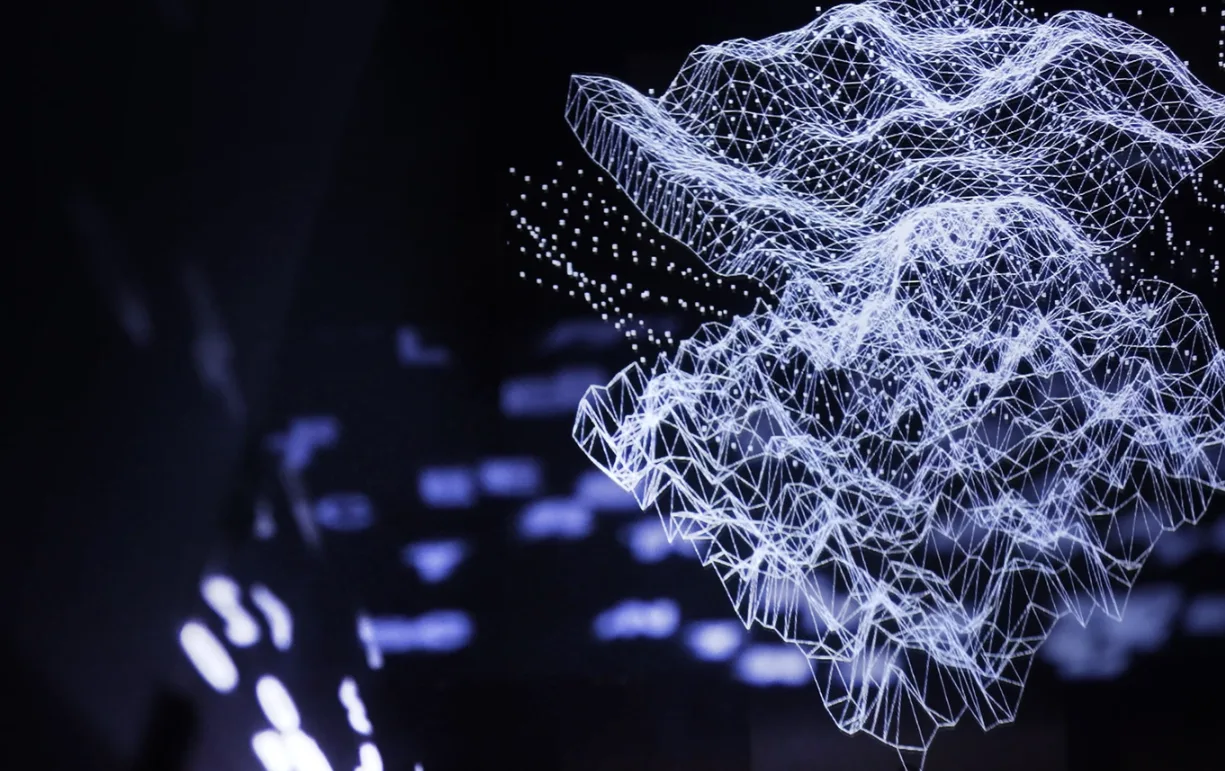
Neural Harmony interactive installation explores the concept of Neural Syntax proposed by professor György Buzsáki. Neural Syntax suggests that the brain organizes information and processes sequences through rhythmic brain waves, akin to a language-like syntax that structures neural communication and cognitive functions.
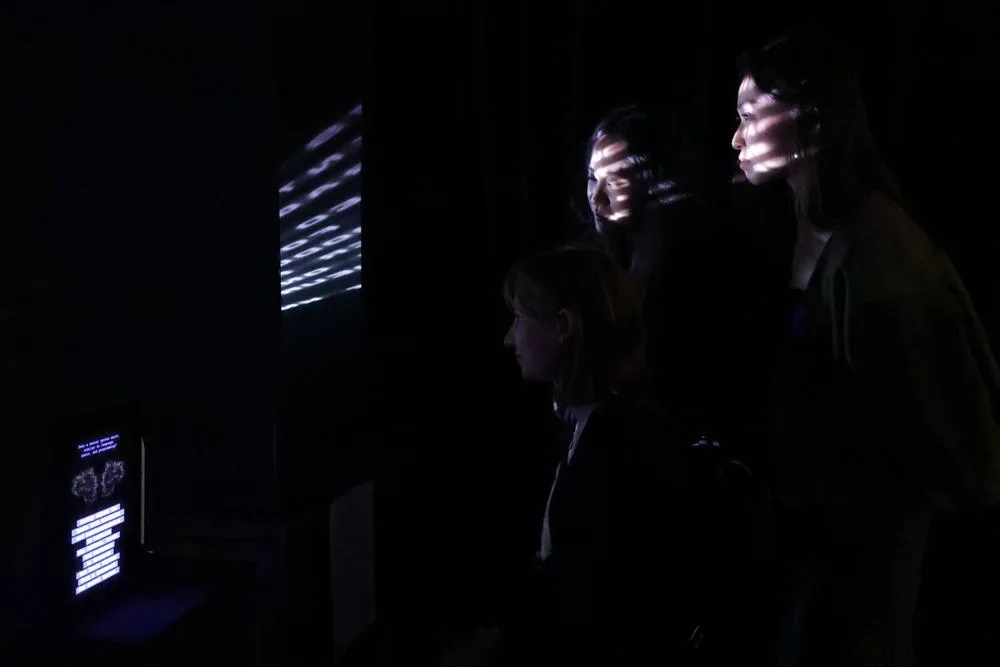
We transformed the Neural Syntax theory into an interactive metaphorical game. By comparing nested brain activity to the structure of language - letters, words, sentences, and paragraphs - we created an intuitive way to visualize these relationships. The interactive installation invites audiences to explore the theory through playing, making its complex concepts easier to understand.
Behavior Description
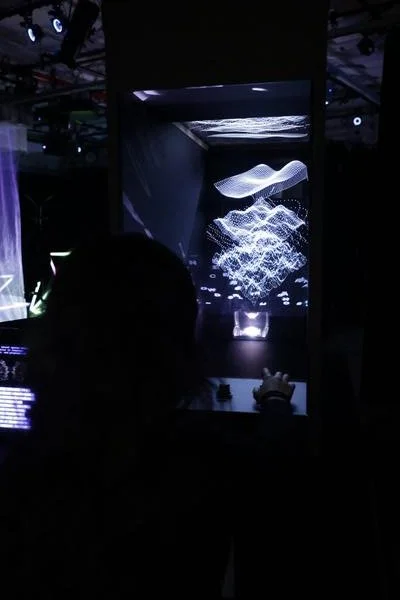
Using the hierarchical relationship of letters, words, and sentences as a metaphor, Neural Harmony illustrates the nested hierarchical relationship between different brainwaves. When the user turns the knob: letters rearrange within specific words, like the faster neural oscillations nested within slower rhythms. Sentences are like the slowest neural oscillations, controlling and organizing all the faster ones.
Technical Information
- TouchDesigner, p5.js and UE5 development for the interactive brain wave and text animation content.
- Connecting Phidget input to control p5.js and UE5 animated experience.
- Projection Mapping and pepper ghost effect.
Exhibitions & Press
- "Neural Harmony: When Art Meets Neuroscience", The New York Academy of Science, Oct 3 2024
- Artechouse NYC, NY, US
- The New York Academy of Science, NY, US
- NYU Neuroscience Institute Buzsáki Lab, NY, US
- NYU ITP/IMA Spring Show 2024, NYU Tisch School of the Arts, NY, US
Credits
- Interaction Design and Unreal Engine DeveloperLois He
- Product Design and FabricationSofia Shen
- Interaction and Visual ProgrammingVio Zhu, Lois He
- TouchDesigner DevelopmentVio Zhu
- Typography DesignXing Zhang
- Collaboration InstitutionNYU Neuroscience Institute Buzsáki Lab
- TheoryNeural Syntax of György Buzsáki
- The installation is collected byNew York Academy of Sciences